Project
Overview
Overview
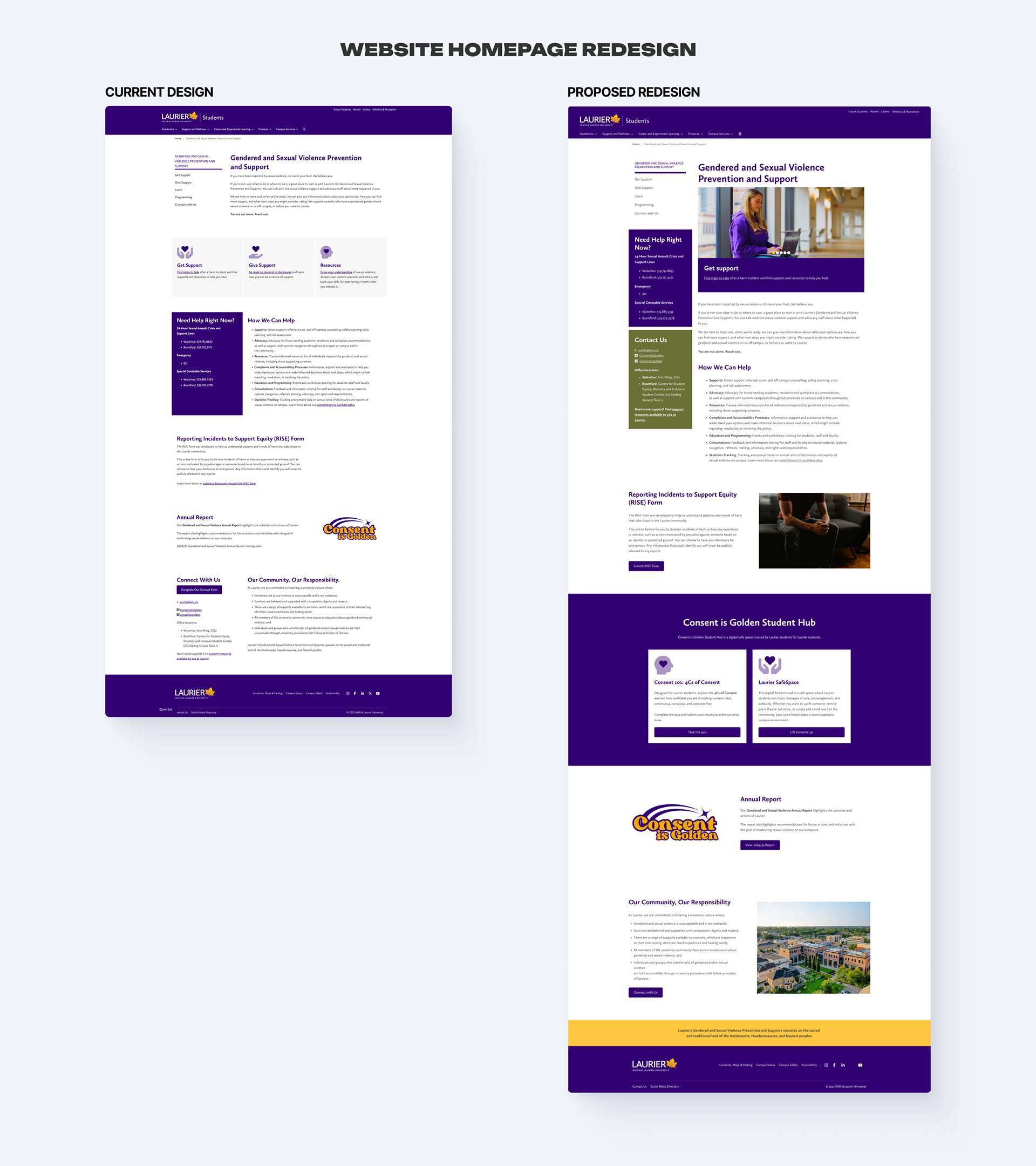
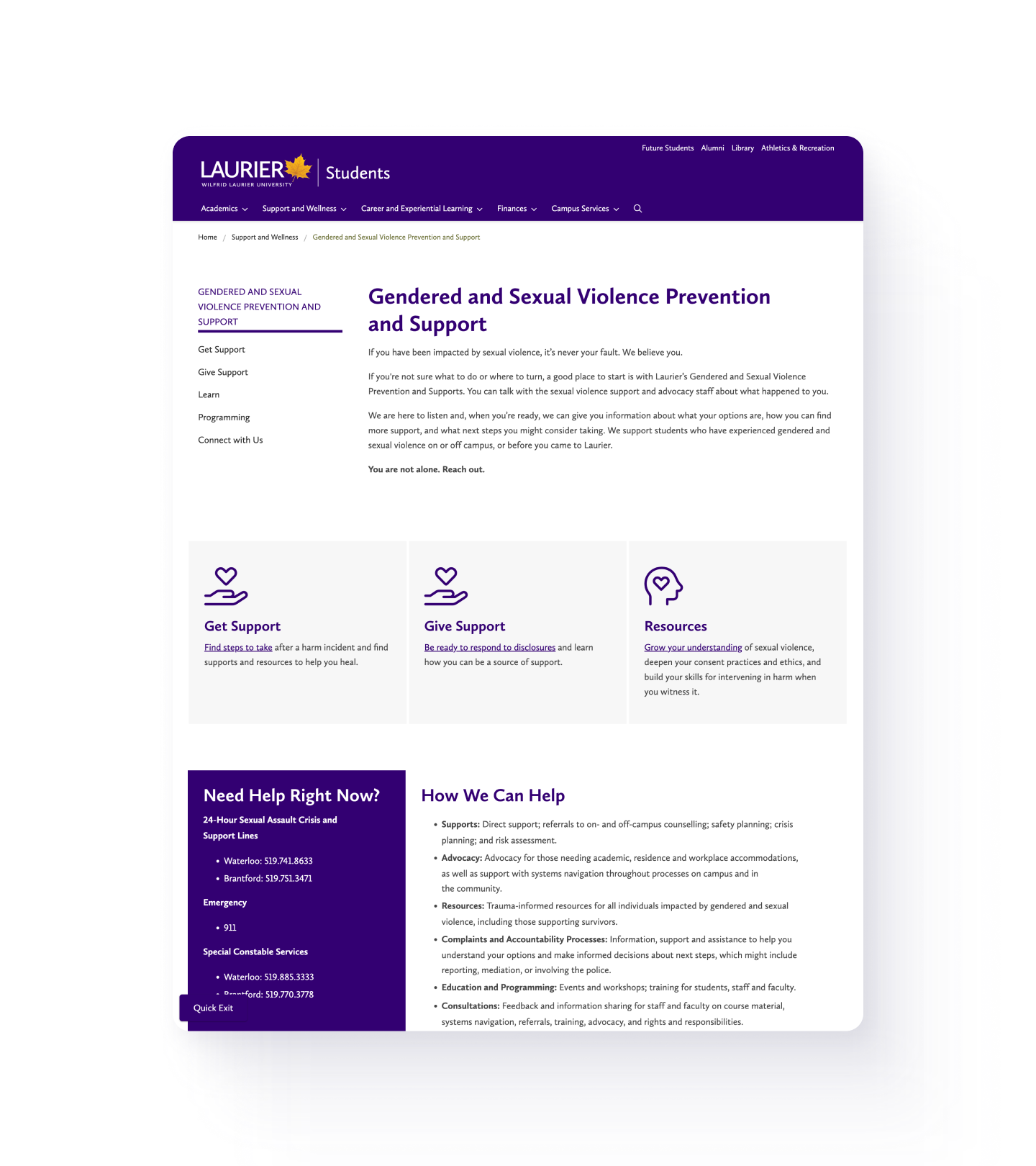
Wilfrid Laurier University's existing Gendered and Sexual Violence Prevention and Support website is a student resource with comprehensive information about its facilities and support, but it was hard to navigate. Its student support felt too cold to approach for students during an already difficult moment. Consent education materials were similarly scattered and under-engaging for an impressionable audience.
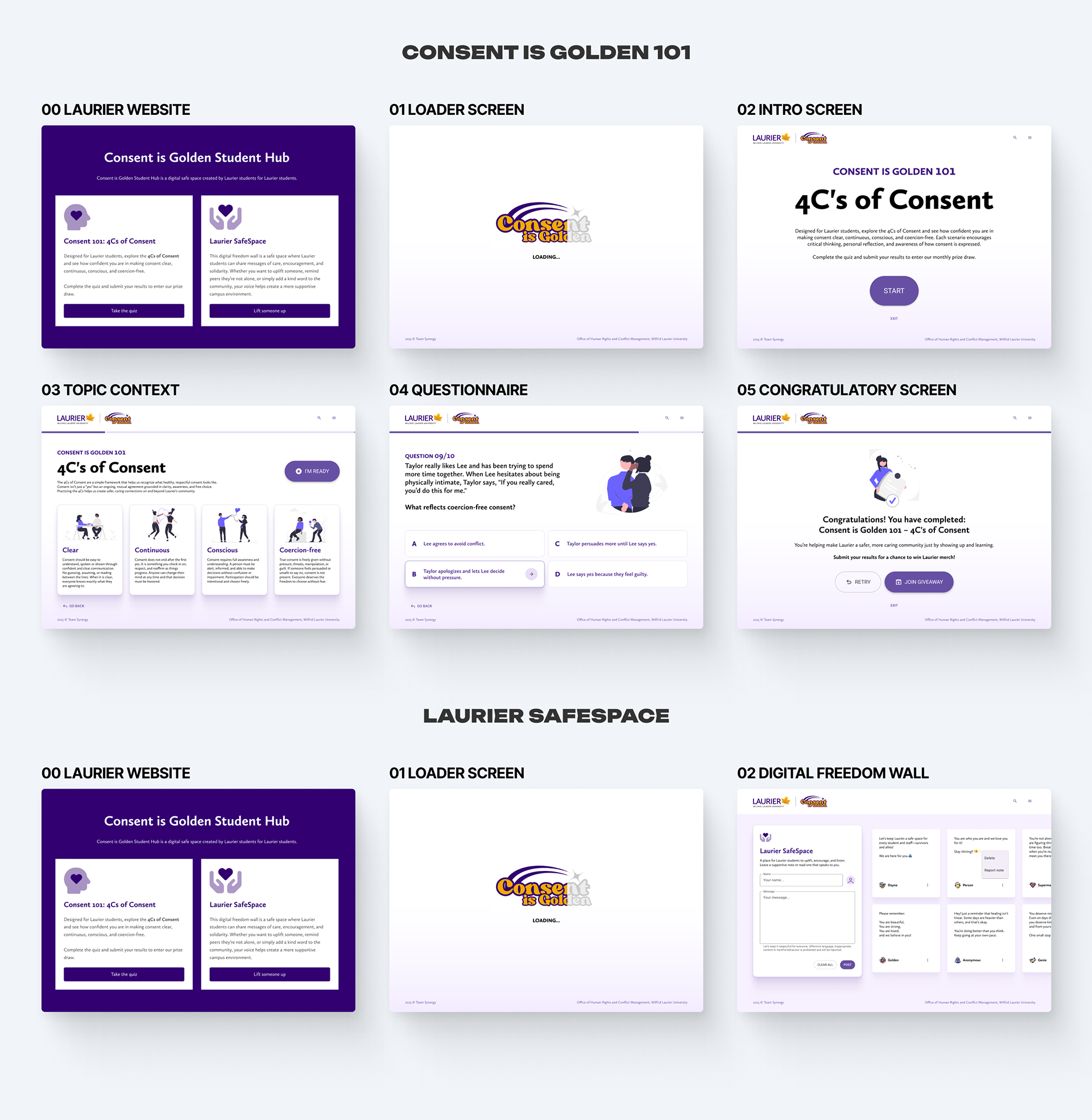
Our team worked on a two-part, extensive project to solve the problems faced: a homepage redesign of the existing GBV/SV support site, and a proposed interactive Student Hub built around the Consent is Golden program using its existing branding.
Client
Dayna MacDonald, Sexual Response Manager @ Laurier's Office of Human Rights and Conflict Management
Dr. Abby Goodrum, PhD, Laurier UX Design Program Director (Project facilitator)
Dr. Abby Goodrum, PhD, Laurier UX Design Program Director (Project facilitator)
Role &
Team
Team
Team Lead, UX Designer (Team Synergy)
I coordinated work with 5 team members and was the primary point of contact between the team, the project facilitator, and the client.
I coordinated work with 5 team members and was the primary point of contact between the team, the project facilitator, and the client.
Sector
Education
BACKGROUND & DISCOVERY
Kicked off the project with the Office of Human Rights and Conflict Management to understand program goals, content requirements, and institutional constraints. The client provided us with relevant stakeholder insights and institutional resources about Gender-Based and Sexual Violence (GBV/SV) within Laurier's student community.
Our team has discovered that Laurier students face barriers in accessing supports due to low awareness, unclear navigation, and uncertainty about which services to use.
HOW MIGHT WE educate Laurier students about healthy relationships, sexual violence response, and bystander interventions while extending genuine support to students in need?
USER RESEARCH
Our team conducted two research methods with Laurier students to fully understand how the current student population seeks out support and information on existing university facilities.
Given the sensitive nature of the topic, all research questions were carefully selected to gather meaningful insights while maintaining participant comfort and avoiding invasive prompts.
User Survey
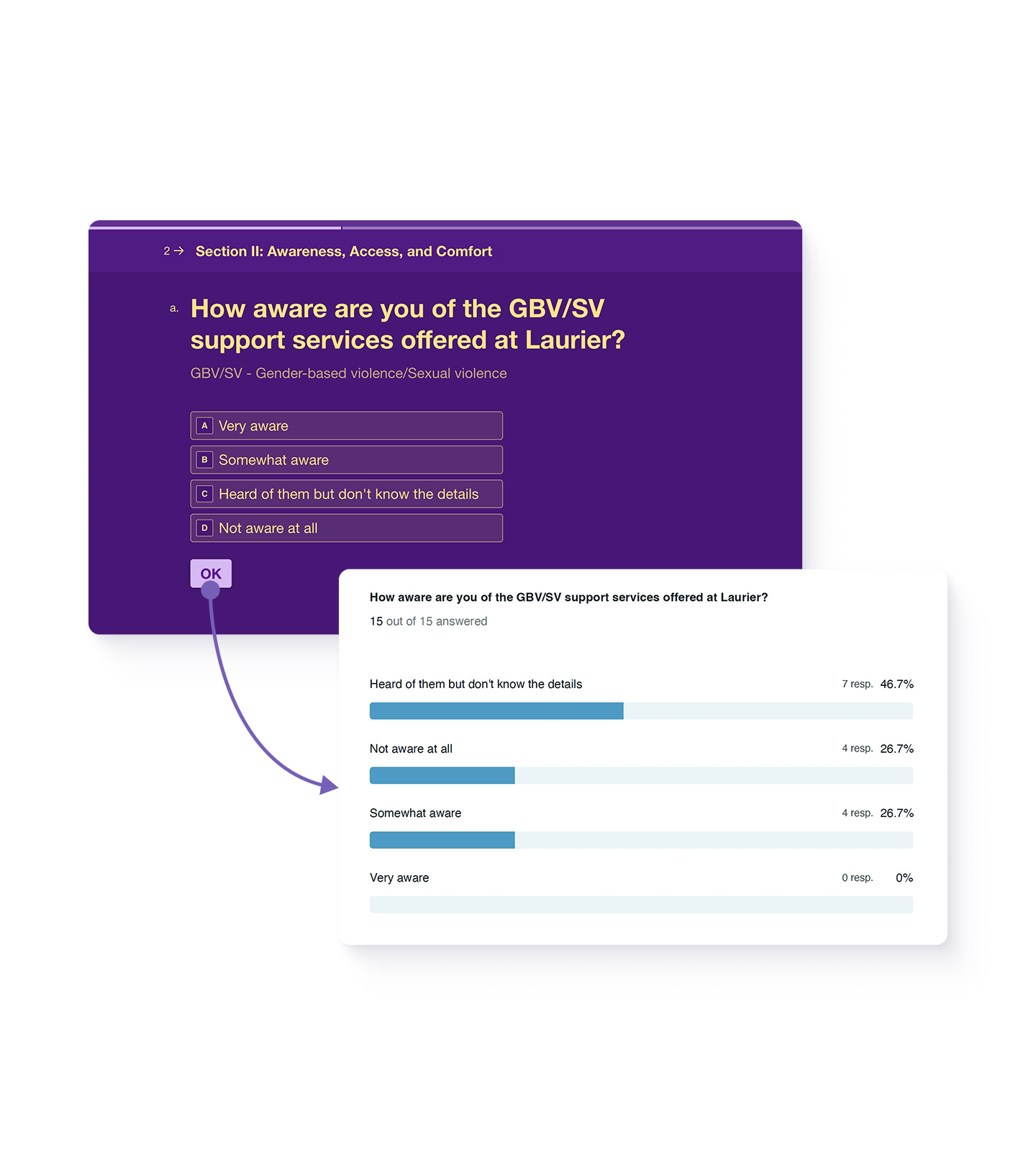
A survey was distributed to Laurier students to gather quantitative insights on GBV/SV support awareness. A total of 13 participants completed the survey within the two-week timeframe, with 47% of students aware that services existed but unclear on available support.
A survey was distributed to Laurier students to gather quantitative insights on GBV/SV support awareness. A total of 13 participants completed the survey within the two-week timeframe, with 47% of students aware that services existed but unclear on available support.
1:1 Interviews
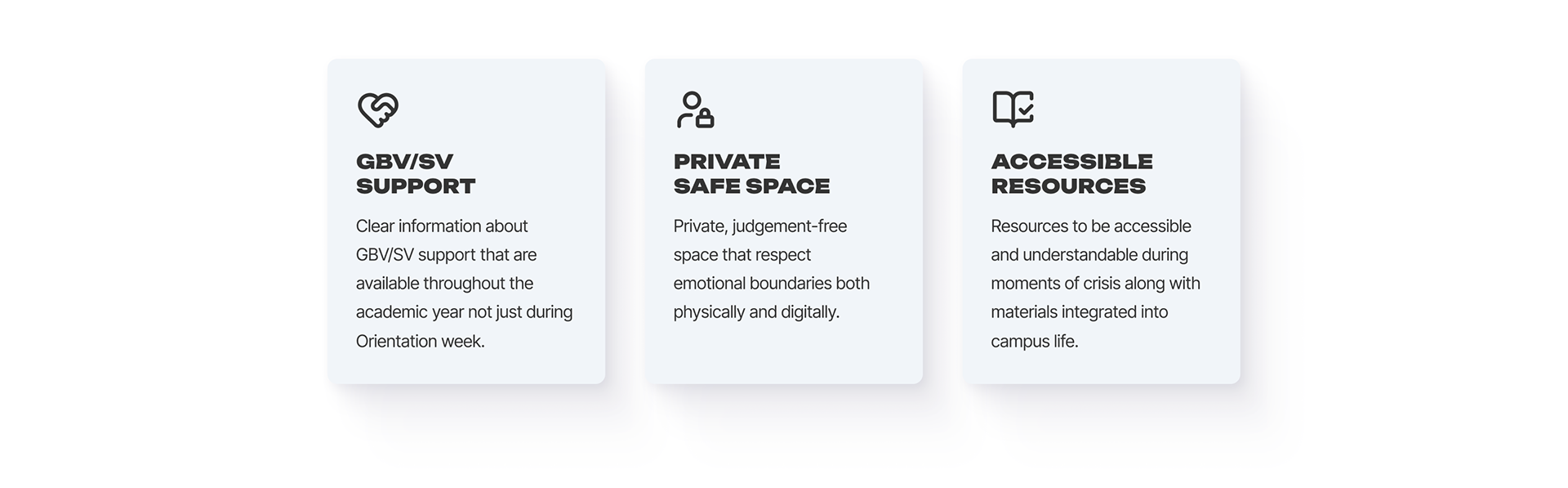
Three anonymous Laurier students participated in one-on-one interviews to provide qualitative insights into support needs. Findings showed a strong preference for private, anonymous, and emotionally safe access to campus resources.
Three anonymous Laurier students participated in one-on-one interviews to provide qualitative insights into support needs. Findings showed a strong preference for private, anonymous, and emotionally safe access to campus resources.
USER NEEDS
After a deliberate user research phase, we can identify our key user needs
necessary to move forward to the next phase of the design process:
necessary to move forward to the next phase of the design process:
Final Solution
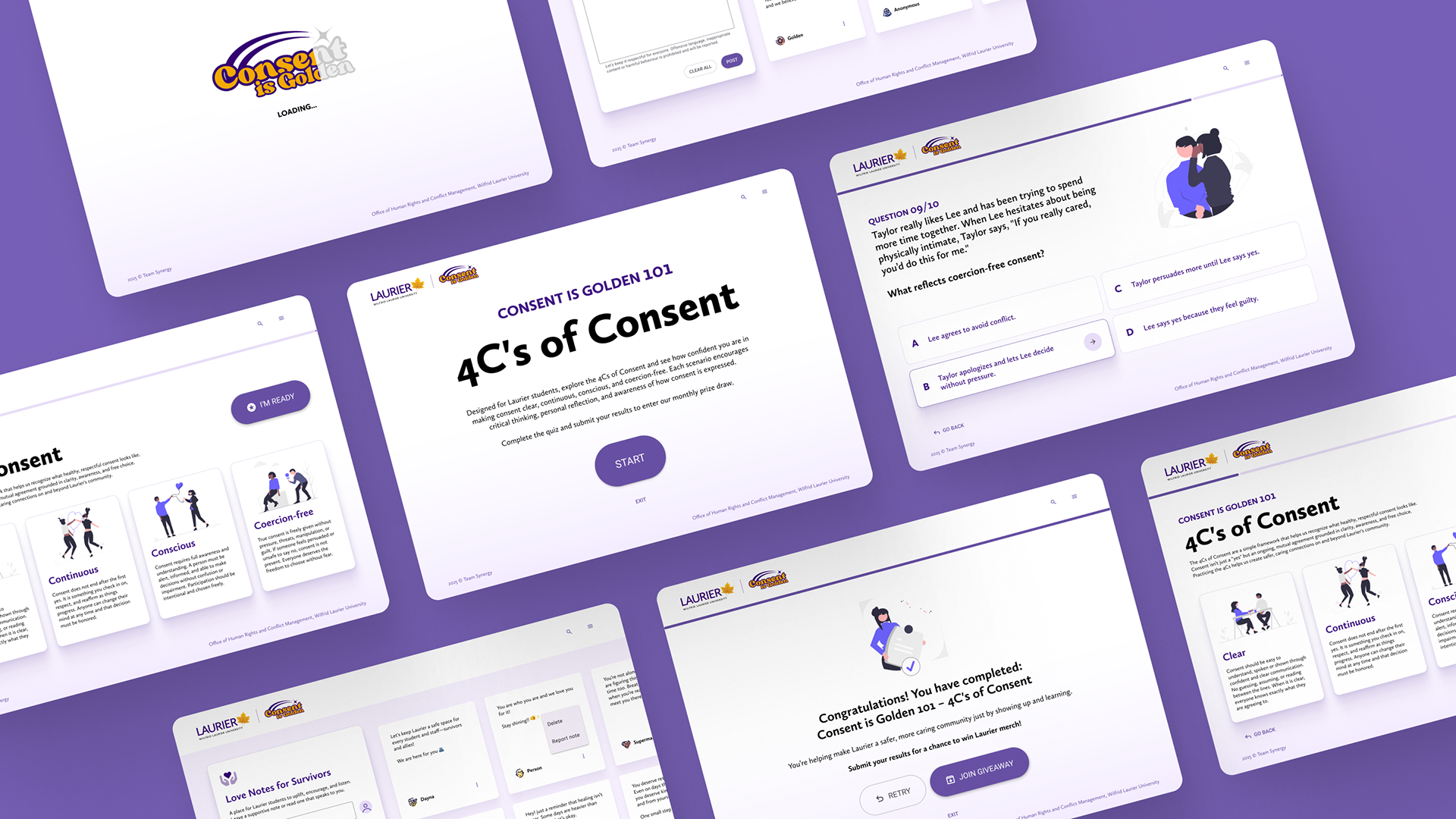
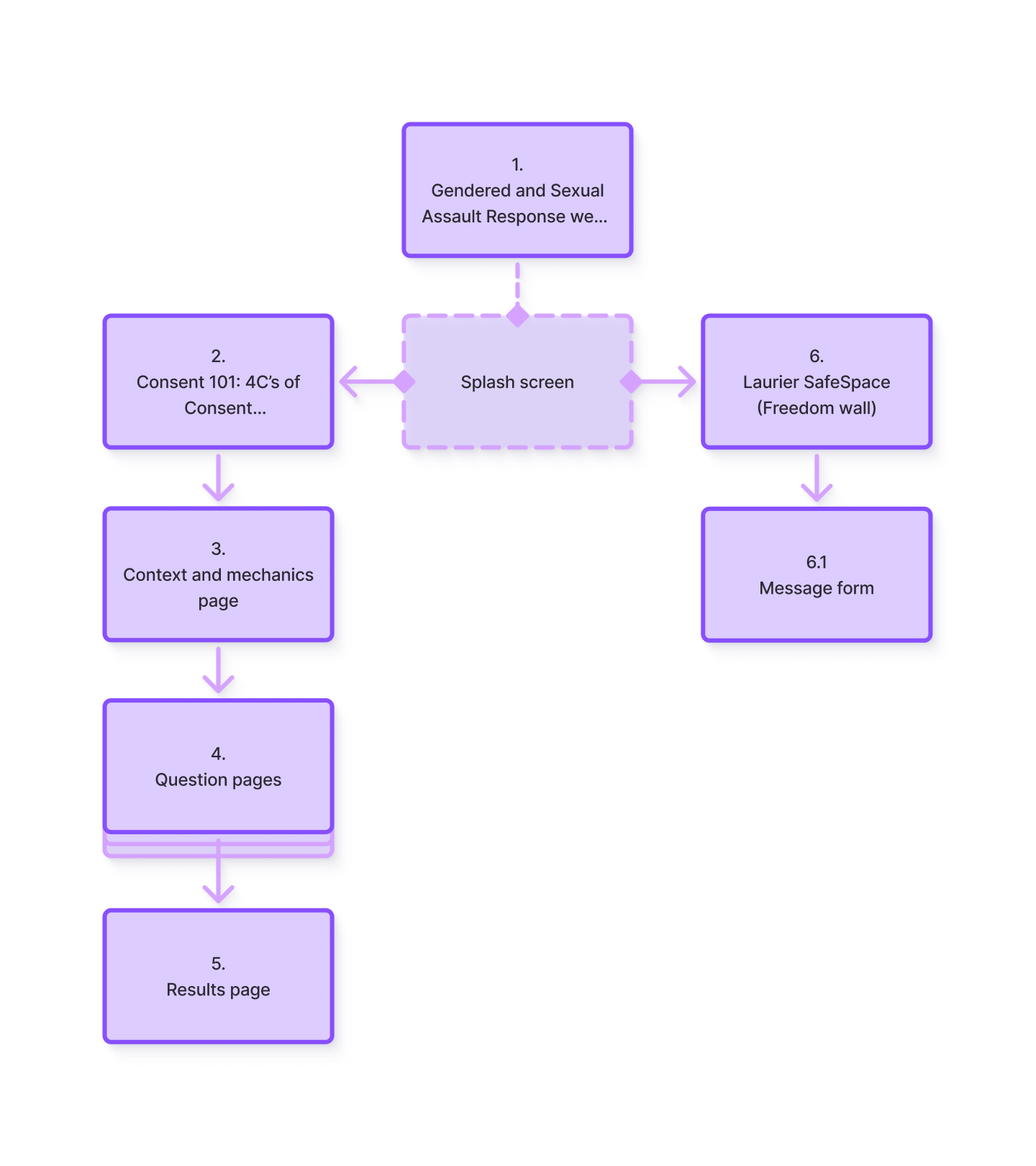
The final concept centers on a comprehensive digital experience— connecting the redesigned website homepage to the Consent is Golden Student Hub that supports learning about consent in an engaging and approachable way.
A web-based solution is more feasible within the project's scope than a native app or complex physical installations. It accommodates diverse user needs while integrating seamlessly with existing Laurier systems (MyLearningSpace, LORIS, Laurier Students website, etc.). It's highly accessible, enabling private, quick access to information.
USER EXPERIENCE DESIGN
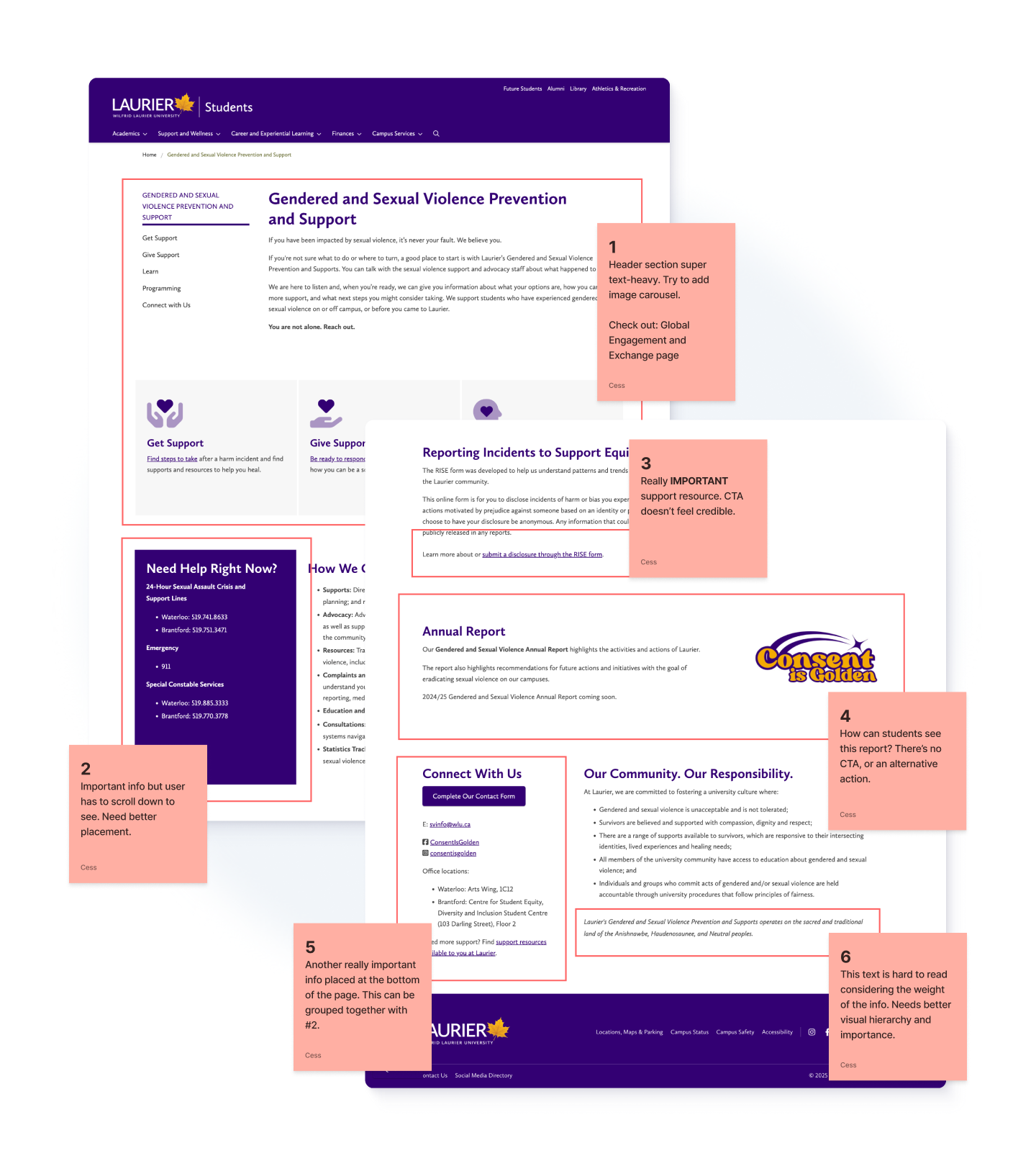
The highlighted sections on the current webpage posed information redundancy, unclear visual hierarchy, and ambiguous CTA elements (buttons, links, etc)— which may have caused an ineffective user experience.
We restructured the current webpage layout to reduce cognitive load and surface the most critical resources within fewer clicks and reduced scrolling. Prioritizing visual hierarchy and clarity without removing any relevant information from the webpage.
LOW-FIDELITY PROTOTYPES
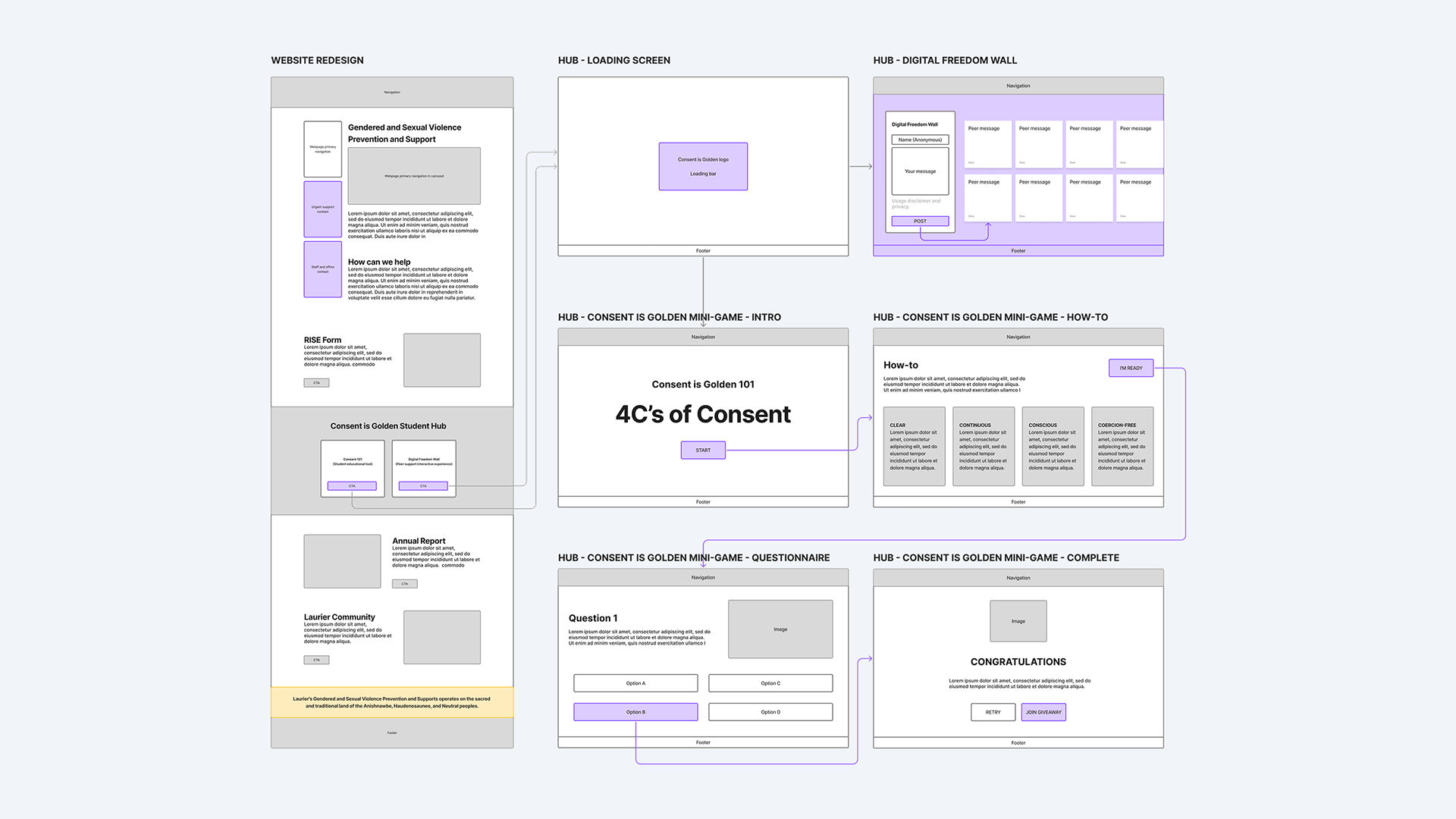
Visualized the final solution into low-fidelity wireframes in FigJam for both the redesigned homepage and the interactive Student Hub. Iterated rapidly with the team based on peer review and stakeholder feedback rounds.
USABILITY TESTING
Wireframes were validated through usability testing with the same students from the interview phase. Participants completed tasks focused on navigation, tone and visual design, finding support resources, and using the interactive consent learning tool.
Feedback highlighted the need for moderation features on the digital freedom wall to prevent misuse. Participants also noted that Laurier’s branding increased trust and credibility. Overall, the redesigned experience was well received, with participants responding positively to the improvements.
FINAL HIGH-FIDELITY PROTOTYPES
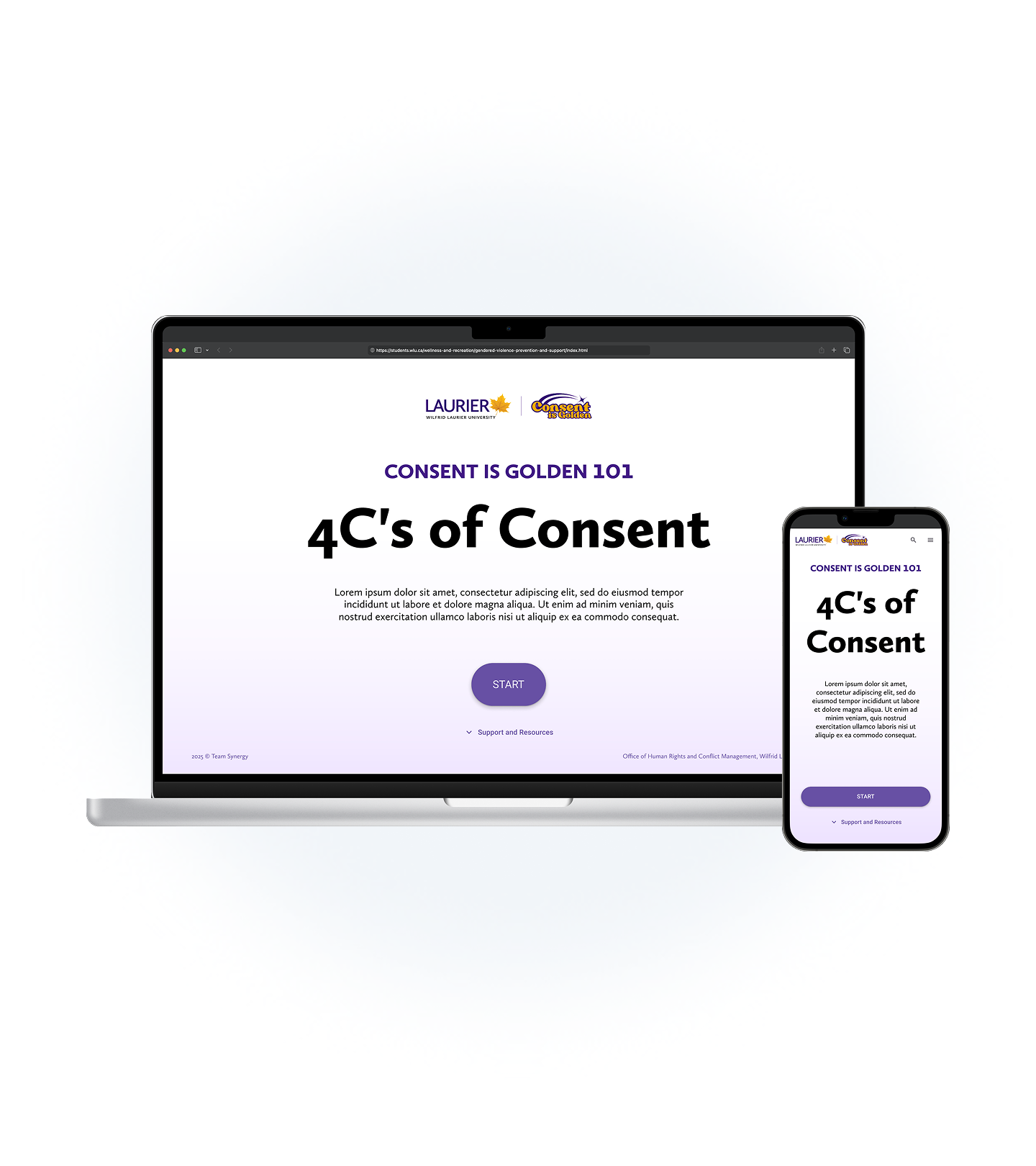
The redesigned homepage and interactive student hub were proposed to Laurier's Office of Human Rights and Conflict Management as a student-centred digital experience that makes GBV/SV support more accessible, clear, and approachable. The project demonstrated how intentional UX design can meaningfully lower the barrier to accessing critical campus resources.